
(The Center Square) – Violence Interrupters founder Tio Hardiman has joined with faith-based leaders and community activists across the city to keep Chicago Transit Authority passengers safe as overall crime on the system has hit some of its highest levels over the last decade.
Group leaders recently announced the launch of a joint-safety task force that will see members riding the system in hopes of preventing crime before it happens.
“I assembled a group of faith-based leaders and community members to join forces with Violence Interrupters so that we can begin to design more strategies on helping keep passengers safe,” Hardiman told TSC. “You have a lot of homeless people on the trains, a lot of people that are suffering from slight mental illness and then you have people that are high on drugs and a few that are a little bit more disorderly. The task force was assembled like a one-stop shop type strategy to get the people the help they need.”
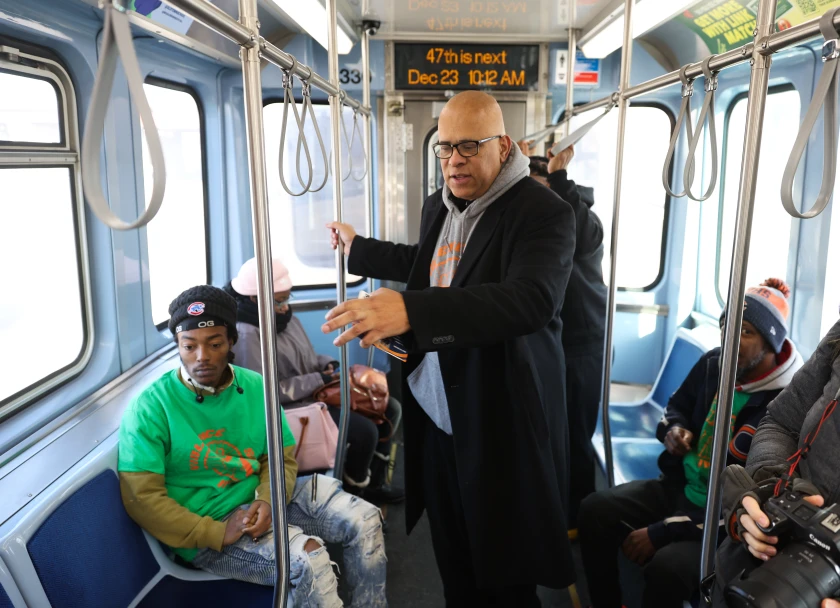 Hardiman said members will ride trains at least twice a week during so-called hot-spot hours where crime and trouble are known to be high. Interrupters will also provide outreach services, while faith-based leaders will promote peace, distribute public safety tips and public health materials.
“We’re not in competition with the police or the K9 unit,” he said. “We would like to complement their work by providing community outreach services to work in areas with high-risk individuals.”
The movement comes together as overall violent crime on the system hit its second-highest level since 2014 last year as arrest rates dropped, prompting federal officials to threaten cuts to city funding short of improvements.
Among the more high-profile CTA crimes over the last year, a woman was set on fire while riding a Loop train, a man was stabbed to death while sleeping on the Blue Line and a woman in a wheelchair was sexually assaulted on CTA property.
With all of his Interrupters being volunteers, Hardiman said he plans to submit a formal proposal for the agency’s Safe Ride Specialist pilot program by its Monday deadline. Requiring partnerships with other organizations, the program will train people to support and engage unhoused riders experiencing a mental health crisis across the system.